Maritana Minerals Limited is an emerging mid-tier gold producer with high quality projects located in the heart of the West Australian goldfields. The Company hosts over 1Moz of gold in Resources and has significant open cut and underground growth potential.
Transcript4000 words, automatically generated
This is an automatically generated transcript. Denver Gold Group cannot accept responsibility for mistakes, errors, omissions, or any action taken in reliance thereon. Use of this transcript is governed by Denver Gold Group’s Terms of Use.
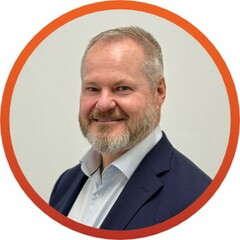
Company is Horizon Minerals, and presenting Horizon Minerals is Grant Haywood, a managing director and CEO, right? Great to meet you. Well er thanks for the introduction and er what a pleasure it is to be here, thanks for the, the Denver Gold Group for the introduction, also to present here today on behalf of Maritana Minerals. So, we have recently done a name change, so you are in the right room if you came to see Horizon Minerals. We've only made this name change this week. why have we made the change? there's a number of other companies with their previous name on the ASX and there has been some general confusion, so we've demystified that and have differentiated ourselves. So why the name Maritana, Well, it's pretty close to our hearts, so Maritana, if you go back to the gold discoveries in Kalgoorlie in 1893, Maritana Hill was one of the first mining leases ever pegged, and now we've got an office on Maritana Street in Kalgoorlie, so it goes to our roots and the foundation of the business and where we, where we operate today. So as we've established, we're based around Kalgoorlie, a premier mining address, 600 kilometers to the east of our capital city of Perth. We have 1.9 million ounces of resource in the ground at around 1.7 g a ton, and we also have our 2.2 million tons per annum processing plant, so it lies 50 kilometers to the north of Kalgoorlie. It's currently a nickel plant that we aim to refurbish and repurpose to a gold plant. So we've done some studies, released those in February into the market, and we've generated a 5 year life of M plan at an annual run rate of 100,000 ounces per annum. So looking at some of the high level metrics, Capex is around $160 million payback's 18 months, and all these metrics are based on $5500 Australian dollars an ounce. spot's a little north of $6700 an ounce today. MPV IR are pretty solid, as I said, annual run rate of 100,000 ounces per annum. The cash costs around 2850 and all in sustaining around 33.50 an ounce. So another thing that differentiates us is we're actually fully funded. So I've just completed a two tranche placement of $175 million and also a smaller share purchase plan for our current shareholders. So that money's hit the banker now, so we are fully funded through development, construction and through the first gold bars in the middle of 2027. So a bit of a a a a snapshot of us, so the capital structures are relatively tight, about 370 million shares on issue. As of yesterday's close around 90 cents, our market cap's around $330 million. We've got $114 million cash in the bank and er if you, if you squint at footnote two, you'll see that we've recently completed that second tranche, so another $118 million has gone into the coffers. So we've got $230 million in the bank at the moment. So compared to our market cap of $330 we're largely cashbacked. We've got an EV of $100 million which shows an enormous value proposition. we've got an EV of $100 million and you're looking at producing 100,000 ounces in a year's time. there's enormous rewrite potential there. looking at the management team, look, we're a pretty, pretty technical, and hands-on and operational type of team, including myself, there's 3 mining engineers on screen, megatronics, sort of engineer that's, leading our build, Doug Flanagan, so he's done large projects, up to $4 billion in all sorts of commodities and worked for some big engineering houses, so he's going to lead the charge on our construction. Also got a few geologists, and millerists up there as well, and a lot of corporate finance experience, so we've got deep experience in the WA goldfields, we've lived there, raised their families there, operated there for over 180 years of collective experience. so we know how to operate there, we know how to build mines, we've ran mines, and we've got the team to deliver on our growth strategy. So looking at the map on the sort of right-hand side, you can see Kalgoorlie's right in the middle of the map there, our tenure's shown in red, and the resource bubbles coming out there, you can see our resource base and where it sort of sits and our Black Swan processing plants sort of sitting up to the north there. So probably just calling out a couple of our resources. our, our Barrara project's 400,000 ounces. It's only a 20 minute drive to the east of Kalgoorlie. Anna Burbank's assets, 466,000 ounces, you can see on the bottom left of the screen there. So two of our larger resources make up 50% of our resource book, and those two projects will sort of underpin our life and M feed for that five year life of mine plan through our Black Swan processing facility. We do have a a bit of a sleeper asset as well, we've got our Nimbus silver zinc project, it's 20 million ounces of silver, 104,000 tons of zinc, and there's a high grade core of 7 million ounces that runs at 770 g per ton of silver. And 12.8% zinc, so there's no value in our portfolio of that at the moment. we're looking at what we do with that asset. We could develop it ourselves and and do a silver zinc con. we might like to put it, put it in another vehicle or IPO it out, so we'll we'll work out what we're doing that with that asset in the next 6 to 12 months and try and extract some value from it. you can also see the concentric circles coming out from our plants, so probably 70% of the resource base is within sort of 50 to 60 kilometers of the plant, so everything's in easily sort of trackable distance to our black swan processing facility. So we've had a busy couple of years, we've been producing out of two assets and using third party infrastructure in the Kalgoorlie region. We've just completed mining in December, just gone and finished processing in January. So we've actually built up a large stockpile at our Barrara asset, so there's 460,000 tons there sitting on the ROM at the moment, or 14,000 ounces of gold, ready to go into our processing plant which greatly de-risks it, from an operational point of view. We'll need to turn our minds on around sort of December this year, er and get ready to to get first gold production in mid 2027. Only 30% of our resource base has made it into the M plan, and some of that is conservatism, for instance, our Burbanks project, we haven't got any of the underground resource in there, it's 90% inferred, so we wanted to infill that program, so we've done 15,000 m into that asset, and, we'll generate an underground study for that in the coming months and convert more of that resource into a reserve and grow that life and M plan. We're also looking at some other assets in and around the region, so I'll probably talk about that in a bit further, but, for a mature goldfield there's plenty of legs in in the M&A activity in the Kalgoorlie goldfields, and we want to extend our initial 5 year life of M plan. And studies, studies, we've moved quickly into feed studies late last year, which is the detailed design, and on the back of that we'll also get APC contracts coming out. So we'll actually deliver that feed study and look to execute those contracts in this current June quarter and commence construction in the middle of this year. and as I mentioned before, we'll also update our studies as we go along and, and ramp up our life and M plan, but we've got all the key ingredients there to be a 100,000 ounce gold producer from the middle of, 2027. So having a look at Black Swan now, probably on the bottom half of the photograph is where we'll do the refurbishment, so that's the crushing circuit, and the 2 mills sort of out on the right-hand side, so all the key infrastructure from the comminution point of view is already in place, just needs refurbishment. You can see the flotation circuit on the top of the screen there, we're gonna leave that intact for optionality. We've actually got 220,000 tons of nickel metal in the ground as well, which is no value in our portfolio at the moment, but, depending on which forecast you look at, 2029, 2030, I think, nickel's gonna come back and we've got great optionality to actually process nickel through this plan as well, as well as our silver zinc project at Nimbus that we talked about before. And we'll actually build a new CIO circuit, sort of on the top of screen now as it's coming into view. So we'll refurbish the front ends and put a gold circuit on the back end. probably just saying it a different way, whether it's a, a nickel plant or a gold plant, it's all the same on the front end, you crush it up and it's how you extract the metal out of the ore that's different, so we'll just build that new CIL plant on. You can see the, the red boxes there. We've already pre-ordered some of our long lead items that are on the critical path. So we've got new SAG, mill motor, a new ball mill motor. already getting constructed along with variable speed drives, so the VSDs are great for us if we're running a softer blend, we'd actually wind back the motors, reduce power draw, reduce our consumers, and actually save on opex and also our pre-leech thickeners always also on the critical path. So those items have been ordered and are well in trainer on their way back. And as I mentioned before, we'll leave the er the sulfide circuit intact, that we can refurbish at a future date, and also do our silver zinc concentrates, potential nickel, and also sulfide ores as well. So this is our Barrara asset. we mine two large pits. The one on screen now is the northern pit. as I mentioned, we've generated pretty significant stockpiles there. There's already 14,000 ounces ready to go through Black Swan. And looking at the graph, it just shows the, I, I suppose the where we're at as far as our resource base is. So the, the higher category or confidence category, mentioned indicated is shown in the red bars. So of our five year plan. There's 74% in the measured and indicated category, and in the yellow bars there's 26% of inferred filling up the five year plan. So, as you've probably seen from the previous presentation and others, we're, we're a hub and spoke model, so our processing plant is our centralized hub, and then we'll, road train our all from the various mining operations into Black Swan. no surprise our Barra and Burbanks asset that make up 50% of our resource base are. And providing the lion's share of the feed, we'll start our Barrara project in year one, we'll spice up the grade with some undergrounds from Cannon and Pennies, and then we'll move on to our cornerstone Burbanks project, our Koo and Cre projects, and then some other open pits as we go through. I suppose wire refurb rather than new build. we actually kicked the tires on 5 or 6 plants, and this was the best option we had available, but there are some great opportunities through refurbishment. the cost is about half, so the comparable on the other side of the new build is another ASX listed company that's in a, sort of similar. Sort of growth phases ourselves so the costs are cheaper, you've already got the er the heavy steels, the concrete, the structural steels already out there with the heavy components, and a lot of long lead items, so you, you save time on that and you save money on that. the time frame itself 12 months compared to up to 2 years. A lot of our approvals are in place. we're already on grid power. We've got our water bores in place which will expand our bore field. tailings capacity if we turn on the mill tomorrow, we've got 15 months. The next 2 lifts are already approved as well, so we've got 4 years of tailings deposition ready to go. So one of the benefits of having a brownfield site. And obviously a reduced environmental footprint, largely already disturbed, just needed to disturb a little more er to put our CIO processing in place. So a little bit more on the study outcomes, you can sort of see a ramp up there in the yellow bars. We're looking to commission around sort of May next year, sort of 80%, in June, and then sort of full production from the 1st of July in 2027. So our first year of production sitting around the 80,000 ounces, 90,000 ounces in year two, and then we sort of hit steady-state production between 1100 and 115,000 ounces, through our Life and Min plan. And you can see on the line there that the large cash drawdown, so obviously the, the $60 million or the 59 million there was, was pre the 175 mil raise, a heavy drawdown in year one as you're you're doing all the construction on the plant, the infrastructure, pre-stripping your mines, developing declines and those sorts of things, but then we're cash flow positive from year one onwards, like strong cash flows of just under a billion dollars at $5500 Aussie. If you look at a gold price of $7000 an ounce, our net cash swells to $1.7 billion in free cash over five years. An EPV of 8% sits at $1.2 billion so pretty compelling economics. They're just where we're at with our milestones and timing. we've got all the ticks in the boxes for quarter 1. There's an extra tick there that's not checked. we've just completed that equity raise and tranche two's been approved in the bank, as we've already talked about. we'll complete our feed studies, as we said, execute those EPC contracts this current quarter, and get constructing and be in coal production by the middle of next year. So some upside, we've talked about our cornerstone Bearra project, our Burbanks project's our, our largest resource, it's our best grade resource. It's typical Coolgardie in the eastern Goldfields, it's a narrow but very high grade. This asset's been mined since the early 1900s. 320,000 ounces has been pulled out at a very high grade of 23 g a ton. we've, we've been doing a 15,000 m infill program, as I mentioned earlier, so we'll update our resource this current quarter and then we'll get onto feasibility studies on the second half of this year and release those to market and extend our five year plan because there's no underground from Burbanks currently in the M plan. And you can see some of the results on screen there, some, some pretty sexy results, were released in December and also earlier this year, you know, in the thousands of of grams per ton. looking at Black Swan, so we acquired the, Black Swan nickel plant, in February last year through a a merger with, Poseidon Nickel. So, Poseidon were a nickel focused company and weren't really focusing on gold. They did pivot probably 12 months before the merger. and did a lot of soils work across their portfolio. You can see the, the plants sort of sitting there in the top left corner, and what they did identify was 4 gold anomalies, and the one that excites us the most is up, up the northern end there. So only 5% of the assays have ever been sort of for gold around this area. So this patch of ground we've acquired, we've not only secured key infrastructure, we've actually got a package that's largely under-explored for gold. There's a 6.4 g per ton hit that's only 200 m from our admin building right next door to our plant. So very early stage project. We're looking forward to getting a small air core core program out there, drill at some different orientations, see what it's doing beneath the surface there, and then we'll follow that up with a larger RC program and, and gee, we'll be pretty excited if we can get a maiden resource right next door to our brand new plant. So, yeah, watch, watch this space with that one, quietly excited. I said we'll talk a bit, a bit more about M&A and consolidation. So, Kalgoorlie's a pretty mature gold field. You can see our tenure there still in red. we're not the biggest by market cap, but certainly we have a dominant land position over 1150 square kilometers in Kalgoorlie on key geological structures, and where our resources aren't, a lot of our grounds are largely under-explored. Only about 40 to 50 m depth in drill holes mostly around there and hasn't had modern exploration techniques, so we believe there's enormous green fields potential in our package. there's also a lot of M&A activity, so with some of the majors and bigger guys, they've got assets that are too far from their processing infrastructure, or they're actually too small for them to develop, but they're right in our wheelhouse and our sweet spot. So those type of assets we're in discussions now, and we can also bolt those onto Black Swan and increase that life and M plan and, and also frontend some of those resources and, and get our ants profile up and a cost profile down. There's also a number of smaller players in the region that have got development ready assets, but they don't have a milling solution. So you can see all the black mills in the area, there's probably about 8 on screen there. they're all full. The gold price is high, everyone's putting their, putting their all through. So we'll actually unlock more processing infrastructure in the Kalgoorlie region by developing our plant and turning it online. So having lots of discussions with the, the small guys as well as the bigger guys. So, yeah, plenty more, plenty more leagues in the M&A space in Kalgoorlie to run. and just to sum up, we've got 1.9 million ounces in the ground. We've got our foot on our own processing infrastructure. We're fully funded through the construction and development. We're turning this asset on and producing gold in the middle of 2027. Got an EV of 100 million and a market cap of 330. And if you look at every other ASX listed company that's producing 100,000 ounces per annum, you can see there's a big, big value gap and a large value proposition there. So, thanks for your time. Thanks, Grant, we do have some time for, questions if there's any questions in the audience right here sensitivity. Yeah Great you're connected to grid power, but can you talk about the diesel procurement in that whole Kalgoorlie region? Yeah, look, it's, it's not too bad at the moment. we're finding the more inland and more regional remote areas are probably strugg struggling more from a retail and maybe a smaller area. We find the, the bigger end of town have got direct sort of contracts with your BP's and your shells and those sorts of things, so I think they're, they're sort of set. and some of the smaller players, and, and we're probably at, at that position now where you have dis distribution, from secondary networks. There is a little bit of exposure there, but look, it, it hasn't flowed right through, so at the moment we're OK. we've run some rough economics and for every $1 a liter sort of price movement, we're under $100 an ounce. So we're not really that price sensitive, it's, it's more around the supply, I think most people are aware in Australia we've got about 30 days supply that's sort of a rolling thing at the moment, so, obviously trying to secure more, but I suppose in the in the sweet spot we're in now, we're not a heavy consumer of diesel, As we ramp up, we'll, we'll be looking to more of that sort of December, January, in the next sort of 6 to 8 months as we ramp up operations, so, yeah, fingers crossed the conflict's resolved by then. Any other questions from the audience and there's one more. I'd like to ask you about the zinc silver nimbus. What's the history of that, given these grades of 700 g of silver and 13% zinc? Why hasn't it not been developed? Yeah, look, that's a great question. it has, it has some nasties in it. so this project was sort of developed between 2003 and 2006, so it's high grade silver zinc, but it's got some heavy metals in it as well, so it's, it's got arsenic, lead, and more prevalent is mercury, so particularly in the oxide horizon, and a bit of the transitional material, there's native mercury, so, The project was sort of mothballed around sort of the late 2000s, and it's been what's called a contaminated site under the contaminated Sites Act of WA. So we've we've cleaned up the site and we're going through reclassification, so we've actually cleaned it up, we've we've done everything, all the submissions that are in with the contaminated sites division and er reclassification's imminent. So we're allowed to drill there, And er we can start to mine there shortly if we wish to do so. So, it's probably stayed there because it's been, there's there's been some heavy metal issues that have had to be resolved by the previous owners that we've cleaned up and er we're just waiting for reclassification and then er we'll put some holes into that project hopefully this year. Any other quick questions? Just maybe a quick question for me then. you talked about Black Swan and especially the underground, resources and potential to bring those in. Is that just a function of drilling that you have to do in terms of bringing those answers in and bringing into the mine plan, or is there anything else like metallurgy or anything like that that you're concerned with? yeah, look, all our projects are at various stages of development, so some of them could, could get through to DFS, most of them PFS, and there's some scoping level studies, and, and mostly it's, shy on the drill bit and the geological confidence. So a lot of our, I, I suppose about 68%'s in the measured indicator category, that sort of flowed through our 5 year life and M plan, but some of our projects like our Burbanks project, our biggest asset, You know, there's only 25% M&I in the open pit resource and only 10% in the underground, so that's why we've spent heavily and put 15,000 diameters into that one. We also want to do some more extensional drilling. what we didn't talk about is, is going forward we've probably got another sort of $15 million we're going to spend and probably $12 million of that is mostly infill, so we're going to infill a lot more of our Barrara project. and also our Kooten Core project, so you may recall they were sort of in the early years of our M plan, so we're de-risking those and getting a lot more of that, inferred material into the, into the resource, and we'll get that sort of 30% of our resource in the mine plan up to 50, 50 and plus, so, yeah, perfect. Thank you very much, Grant, that's a great presentation. Thank you very much. OK. So That was our last presentation for the session. we're gonna recommence at 3:20. Thank you very much, everyone.
Recorded at Mining Forum Europe 2026, Park Hyatt Zürich, Zürich. Prepared for information only; it is not investment advice or a recommendation. Statements are those of the presenting company as at the date of the presentation. Market figures in US dollars, not as at the date of the forum.