Tesoro Gold Limited is a gold exploration and development company listed on the Australian Securities Exchange (ASX: TSO), with additional listings on the OTCQB market in the United States (OTCQB: TSORF) and in Germany (FSE: 5DF).
In 2017, Tesoro made Chile’s first recognised Intrusive Related Gold System (IRGS) discovery, establishing a new corridor of exploration within the highly prospective Coastal Cordillera. The Ternera Gold Deposit now hosts an unconstrained 2.0 Moz Mineral Resource Estimate at 1.07 g/t Au and is the focus of a proposed initial single open pit gold mine and processing facility at the El Zorro Gold Project (El Zorro). Ongoing drilling continues to target extensions to the Ternera Mineral Resource, while exploration across the broader IRGS corridor is aimed at identifying additional discoveries within this district-scale system.
Transcript2900 words, automatically generated
This is an automatically generated transcript. Denver Gold Group cannot accept responsibility for mistakes, errors, omissions, or any action taken in reliance thereon. Use of this transcript is governed by Denver Gold Group’s Terms of Use.
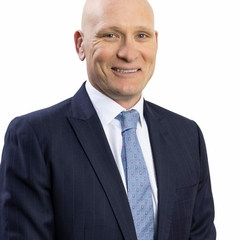
I think It is now my pleasure to introduce Zeph Reeves, the managing director of Tesoro Gold. Welcome. Thank you very much. Thank you. good afternoon, everybody. I'm the managing director of Tzoro Gold, and Tesoro's got a gold project in the north of Chile called the El Zorro Gold Project. We made a discovery there back in 2017 and have since drilled over 140,000 m into that project and defined the Tenera gold deposit, which is currently at 2 million ounces, and we're advancing that deposit through studies towards development. the project itself, it's a mature gold development project and we believe it's got belt scale exploration potential. So this is an intrusive related gold system, a completely new system for Chile and what's typically found in Chile, which is often dominated by epithermal gold deposits and IOCG style deposits. And you can see on that map there, our concession holdings in the, yellow line. We hold about 570 square kilometers of concessions. And a majority of that ground was obtained in a non-competitive process because nobody was looking for these types of deposits previously in Chile, and what we have defined is an over 30 kilometer long now gold prospective corridor. It's got multiple drilled targets on it, but we've made the discovery at Tenera, which is currently at 2 million ounces at just over 1 g per ton. and obviously we're sitting in Chile, it's a well-known mining jurisdiction. This project is simple. That 2 million ounce deposit is a beautiful open pit deposit, fantastic metallurgy and a very simple, straightforward gold mining project. And we believe there's immense material upside beyond the current MRE. That deposit is open in all directions. We believe there's a significant growth with more drilling. And we've got this entire belt that has barely been explored with numerous very compelling targets emerging from the exploration work that we're doing. A quick corporate snapshot, probably the Big thing to note on this is that we have Goldfields Limited as around about a 13% shareholder. They've participated in a number of placements over the last 3 years. they own a mine about 160 kilometers from us up in the high Andes, the Solaris Norte mine, which they've just brought into production. they've got a large presence in Chile. Everybody always asks why, Goldfields, what the Goldfields see in this project, and I think for all the reasons that we like it, there's additional growth in Tenera. It's probably not big enough for them yet, but it's growing, and what can this belt deliver and in a coastal location. it's a far easier proposition to build a new gold mine than up in the high Andes where they've just completed Solaris. currently we have around 29 million cash. We're well funded for the work program work programs that we've got planned. And market cap's around $200 million Australian dollars. The share price is sort of bobbing around the the dollar a share mark. current broker research coverage shown there, so we're starting to get well recognized in the Australian market and getting good coverage from a number of, stockbrokers and there was also another research report out this week from Tamesus out of London. so this slide, cannot be underestimated the advantage this project has because of its location. you can see that map. There's a number of other operating mines and projects in our region. It's a very mining rich region. Lots of mines in operation. Lots of mines have been permitted in this region. But a lot of these projects are up in the high Andes at altitude. they have additional challenges, not only with the altitude, but with infrastructure, power and water and so on. but what we have is a coastal location. This project's only 600 m above sea level. It's 13 kilometers from the coast and 20 kilometers away we have a desalination plant and a high voltage power line, which we have signed MOUs with, with the owners of those pieces of infrastructure to supply water and power to the project. So that advantage cannot be underestimated. The power that goes into that line is currently at around 90% generated from renewable energy, so we're somewhat insulated from fossil fuel fluctuation in the price of fossil fuels. and we're negotiating long-term contracts for delivery of power to the project. Caldera is an operating port only 50 kilometers away. airport 76 kilometers away, you can go from Santiago, be on site, within a couple of hours from Santiago, and then back in the same day, so super easy to get to and a great place to build a new gold mine. So, earlier this year, our board made the decision to advance this project and the Tenera deposit, directly into full DFS or definitive feasibility studies, which we're aiming to deliver. By the end of the year and final investment decision, and we did that for a number of reasons and we've we've skipped over the pre-feasibility, part of, of the development process for a number of reasons. One, we produced a scoping study or a PEA last year which had some very advanced inputs into it that were more or less at pre-feasibility level. And The other part of it is that this project has not raised any technical red flags at all. It's got that location piece. We've solved the power and water issues that you often see in Chile, and this is one of the simplest gold projects that I've ever been involved with. They're all bodies large and robust. The metallurgy is fantastic, it's going to be a conventional CIP plant, and we're in a proven developing a proven permitting and development pathway that we're seeing in Chile now, particularly with the new government that has just taken office. So we're advancing all of our technical studies, that's all happening quite quickly, so detailed project configuration and trade-off studies, we've completed those and stepped straight into that DFS level work streams, and they all those work streams are materially advanced, so we're aiming to deliver a completed DFS on this project in late this year. Followed by a final investment decision. So just to get an idea of the type of metrics that this project can produce, we completed a scoping study in 2025, and I think probably the main things to note on on these numbers are this was done at a 2750 an ounce gold price. Obviously we're, Substantially higher than that today, but at 2750, this project still produced a post-tax MPV of $663 million US. And an IRR of 51%. I'll show you in a moment what happens with an increased gold price, but probably the important numbers for us really are, this would be based on a 3 million tons per annum throughput plant to produce a life of mine average all in sustaining cost of around $1200 US an ounce. At a fairly modest capital cost of $250 million US. So we expect in the DFS some increase in some of those costs. I think all in sustaining's still going to be in around $1300 an ounce. Capital costs will increase. We'll see somewhere between 300 and 350 million we think at this stage. And that's going to deliver a mine that will produce on average over 110,000 ounces a year over its first nine years. What happens with gold price, obviously, as with all gold projects, heavily leveraged to the gold price. We have run and published the numbers up to 3950. our regulator in Australia won't let us talk about anything that we haven't published, but you get the idea. So at 3950 we start to see an MPV well in excess of a billion dollars US dollars. And an IRR of 85%. So I think on today's gold price we're pushing $2 billion US dollars, MPV and IRR well over 100%. So this project generates fantastic cash flows. We believe it's a low risk, simple, straightforward development opportunity. highly leveraged to the gold price. So all that being said, the decision was made to push through into that DFS and you'll see on that slide our proposed timelines. we believe this is the pessimistic view of our schedule. We've got ability to compress some of this, So we'll deliver a DFS late this year. that's area in the middle of that slide in the light blue box is our permitting and and license to operate approvals process. So we're well advanced on the, on the environmental baseline studies. you have to do a baseline study. Fieldwork in Chile for 12 months, we commenced last September, so we're well advanced on that, we'll complete this September, and then compile our application to submit to the government to get a permit to develop and operate. however, we've seen a very positive, change in government. the new, a new president and a new government has come to power in Chile in March. And they are also, they've already made some very strong signals publicly about fast tracking or compressing the time frame that it takes mining companies to get permitted to build new mines. They want to see more mines online. As quickly as possible, so we're optimistic that that time frame can be compressed, and that will then lead into mine financing and the commencement of construction. Currently we have first gold predicted to be or scheduled to be produced during 2029. So last year we completed a reasonably large fundraiser, we raised $34 million Australian dollars. That sees all of that DFS work and permitting work fully funded, but it also sees us funded for for around 38,000 m of drilling. 20,000 m of that drilling is allocated to infill drilling on the main deposit to increase the resource classification over some areas of the deposit to allow us to update the resource and publish an initial ore reserve. That program is close to being complete, we should complete that this month. And we will then use that information to produce an updated resource estimate in the middle of the year with a larger proportion of the material into the indicated category, which we would then, Calculate an initial ore reserve at Tenera. Following the completion of that infill program, we believe Tenera's got a lot of growth in it. We've got some meters allocated to extensional drilling at Tenera. And new discovery drilling throughout the belt, so we have that 30 kilometer long zone, completely unknown prior to Tesoro getting there. this is highly unusual in Chile, especially in the coastal belt. And we've got a number of compelling targets that we'd love to get in and drill this year, so we have 12,000 m in new discovery drilling planned. Just on our infill programs and the current resource, there's a a a bit of a snapshot there out of the the mining software of what the resource looks like. So this is one of the reasons we get an a good all in sustaining cost. This is this ore body is essentially a large blob, so it offers itself beautifully to open pit mining. We've got fantastic metallurgy as well, which also helps lower that cost. But you can see there currently 62% of the resource resides in the indicated category. We want to get that up over 80, 85%, and that's what we're striving to do with that infill program. in terms of resource growth, the figure on the left-hand side, of this slide shows a couple of holes that we've drilled which are over 400 m down plunge of the current planned open pit shell. So that pit's going to produce about 1.3 million ounces over initial 14 year mine life. 400 m down plunge, we've got, we intercepted high grade. 8.8 m at 3.54, which included a meter at 27.7 g. You can just about take our entire pit resource and place it in that space between the bottom of that pit and that drill hole. So it clearly indicates that this is a much larger system. We believe there's significant resource growth with more drilling, and there is a high potential that this will go underground post open pit mining. we also intend to do a few more day polls to further test, some other areas well below the planned pit shell. in terms of shallow extensions, north and south of the deposit are still open. that blue line there is the current resource outline, but you can see some of the drill results to the north, 68 m at 1.18. It's not in the resource, we need to go back, do some more drilling and continue to expand north. Likewise to the south. 53 m at 1.17 for example, not in the resource, and we need to do more drilling to include that. And we have the Tenera East area there, the area shown in gray, we believe that's a new ore body. We've done some initial drilling there. we think that we can delineate some additional resource ounces at Tenera East. It will have a material impact on the pit because it actually sits in the pit wall. Of the current pit design, so it has the ability to, pay for some cutback and certainly reduce the stripping ratio, so, as soon as our infill program's completed, we're actually going to get to Tenera East and do some more drilling. and we've had some initial high grade success over at Drone Hill. We believe the fault systems that control mineralization at Tenera go across to Drone Hill. we've had an initial drill hole over there which hit nearly 2 m at 77 g. So, we've got a lot more work to do there, but it's a clear indication of the expansion, potential that we have at Tenera. Outside of Tenera, we've had a very keen focus on exploration within about a 5 kilometer radius, Reason being, we intend on building a plant at Tenera to to to process the ore from, from the pit. And we've got some very compelling targets close to Tenera at Drone Hill, Tenera East that I've spoken about, but also down to the south at Penablanca. And then elsewhere through that 30 kilometer belt, we've got a number of very compelling targets that we will get on the ground and drill this year with that 12,000 m, so. you know, we think that at El Zorro, you've got this scenario where you've got a base case 2 million ounce deposit which is going to be able to produce over 110,000 ounces a year, getting advanced very rapidly through the development phase. But you've got all the exploration upside of essentially a green fields exploration, new gold camp in a coastal location in Chile. and now we're sitting in the, the prime time to get a new project permitted. And up and running as quickly as possible at Chile, so it's going to be quite a a journey this year, and, we see immense upside beyond the current MRE and we really believe that this belt could deliver a multi-million ounce potential over time with more exploration. So happy to take some questions. I'll start. Why not? I mean, Chile is known to have hard times with water. sounds like you got that problem solved. in fact, your construction water should be available as soon as sometime late next year. you wanna just maybe walk us through the process that you've undertaken to organize that and, the things that maybe investors should watch out for. Yeah, so we're in a, in a lucky position regarding water. I'll just get back to the location side. So there's a company with the Cerro Negro mine cap actually own the water infrastructure and that power infrastructure. They have an interesting business model whereby they go and develop a new deposit. They provide that deposit with infrastructure, power and water that they build themselves, but they generally build it over capacity with a view to onsell the extra capacity to communities, other mining projects, other other customers. So they own that desal plant, and what we're actually contemplating doing, and all of our network has been completed using this water is using the wastewater from that desal plant, so. The, rather than the freshwater, we're taking the brine, which is about twice the salinity of salt of normal seawater, and we're taking that and using it in the processing plant. It works beautifully because it's been through a filtration system. It's got no organics in it, so the cyanide doesn't have anything to interfere with the way it works. We get very low cyanide consumption. We're less than 1 kg a ton cyanide consumption on on our network so far using that water. And it solves an environmental issue that CAP also have having to normally pump that water back into the ocean, so it's quite a win-win solution for us and it's a cheap solution for us for for water. Cool. Maybe one more. Great, thank you.
Recorded at Mining Forum Europe 2026, Park Hyatt Zürich, Zürich. Prepared for information only; it is not investment advice or a recommendation. Statements are those of the presenting company as at the date of the presentation. Market figures in US dollars, not as at the date of the forum.