Founded in 1891, Hecla Mining Company (NYSE: HL) is the largest silver producer in the United States and Canada. It operates silver mines in Alaska, Idaho, and in the Yukon, Canada, and owns a number of exploration and pre-development projects in world-class silver and gold mining districts throughout North America. Hecla Mining Company is the premier silver company in North America.
Transcript3500 words, automatically generated
This is an automatically generated transcript. Denver Gold Group cannot accept responsibility for mistakes, errors, omissions, or any action taken in reliance thereon. Use of this transcript is governed by Denver Gold Group’s Terms of Use.
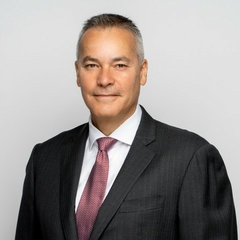
Next, we have Rob Krichmov, president and CEO of Hekla Mining. Good to see you as well, thanks. Thanks. Thanks. Good morning everyone and thanks to the European Mining Forum for having us here in Zurich. I'm Rob Krichmov, president and CEO of Heckler. you know, I've been in the chair for 18 months now, and, I tell you that the more I've learned about our business, the more I realize that we're building something that's really quite, quite unique and special. I want to make the next 15 minutes or so, making that case. We are headquartered. In Co Coeur d'Alene, Idaho, and we are the largest silver producer in Canada and the United States. Now, I will be making some forward-looking statements. I'll also be talking about non-gap financial measures throughout, reconciliations are in the appendix and on our website in our 10K filings. as well. A few numbers to ground you. NYC Ticker HL market cap around about $13 billion today. We've got a very strong trading liquidity, 670 million shares outstanding balance sheet at year end. We had $241 million in cash, $262 million in long-term debt. I say had because debt was retired last week, so now we're basically debt free. We've got a fully, Undrawn $225 million revolving credit facility and a $75 million accordion on top of that. Balance sheets in the best shape that it's been for years. Ownership around about 78% institutional, 22% retail. 10 analysts covering us on the left of the page, including Cosmos and others who are here. There are 6 things I really want to talk to you today and keep in mind as we go throughout. So our firstly our silver Legacy, oldest precious metals on the New York Stock Exchange, longest listed mining company, 135 years. I think that basically shows that we've got a demonstrated track record, that we're able to operate through every commodity cycle, manageable, through depression, through everything, and it speaks to our resilience and culture. The next is, we're in the best jurisdictions, every mine, every project, US, Canada, full stop. And I think in the world that we're living in at the moment, I think that that really matters enormously. We've got peer leading silver exposure, both in revenues and reserves, and I'll show you some data on that in a minute. So when silver moves, we obviously move as well. as I said, reserve dominance. Our average reserve mine life is nearly double, all of our peers. Again, I'll I'll show you some data on that in a minute. We've got real project momentum. We've got a pipeline of, that's at a genuine inflection point at the moment, and I'll be specific about that coming up. Cost excellence, we are the lowest cost producer in the peer group, and obviously with the silver leverage, it's a very powerful combination. So I think this map in one image tells you our jurisdictional advantage in a single image. Green's Creek in Alaska, one of the world's premier polymetallic mines. Lucky Friday in northern Idaho, one of the, it's last year it smashed all production records, and it's a it's a real story, a transformation story, and, Kino Hill in the Yukon, the largest primary silver mine in Canada. And we've also got a growing exploration portfolio, and it's anchored by some really exciting projects in Nevada which I'll come back to. So one jurisdiction premium, really no political risk. I think that's really increasingly rare in this industry and worth more now than it was 5 years ago. This is a chart I keep coming back to cause I, I don't think it gets enough credit. The silver peer group average reserve life, shown in that dashed line at the bottom is around about 7 years, we're at 13.3%, so nearly, nearly double. And it's not just the company average. Each one of our individual mines shown in blue. It beats the peer average on its own. So Green's Creek 12 years, Lucky Friday, 15 years, and Keno Hill 13. So our weakest asset exceeds the industry average. I think another thing worth flagging here is this chart is also sorted out from left to right by gross profit, and our best earning assets, they're all silver mines, they're not gold mines. And so that's the sort of portfolio that we've built. Long mine lives obviously mean that you have planning certainty, you have visibility over the horizon, you can see what's coming at you. It creates genuine optionality and a lower cost of capital over time. That's a real structural advantage. This bubble chart basically tells the same story visually. X axis is silver equivalent grade. Y axis is reserve mine life, bubble size is the scale of the reserves, so more reserves, larger bubble. Blue is US and Canada, gray is everything else. And you can see all of our mines in the upper right, high grade, long life, best jurisdictions. No other company in this peer group has 3 assets in that part of the chart, that's that's our portfolio. So for investors in this room, this slide really matters. Q4 2025, 59% of our revenue from silver, strip out Casa, that was our gold mine in Quebec which we which we sold recently in Q1 this year, and that number now is nearly 73%. So look where we sit on that scatter plot, we're we're that outlier on the right, high silver revenue, highest silver reserve concentration. So if silver leverage is what you're looking for, we are the most direct way to own it. So what does that leverage look like in practice? At $75 silver and $4500 gold, close to where the market is today, projected 2026 cash flow is around about $600 million. At $100 silver and $5500 of gold, which is where we were not that long ago, that grows to approximately $850 million and that cash is being deployed with discipline. Our debt has been retired, as I said. Record exploration investment is underway, and the reason for that is to try and generate value and create options for us. And our project pipeline is funded. Each of those builds value in a different way, but together they compound. This shows our production trajectory. So last year we produced about 17 million ounces. 2026 guidance is 15.1 to 16.5 million ounces, and I wanna address that step down directly because most of you are going to ask why. It's essentially a single asset, single grade story. Green's Creek, that's our cornerstone asset, the grade bumps around. It is a complex ore body. Sometimes we're mining, some years we're mining higher grade zones, others, others lower. And the mine sequencing this year takes us into a lower grade zone, so this is a normal function of how underground mines work, the grade varies year to year as you work through the ore body. Lucky Friday and Kinna Hill, they're both broadly flat year on year and. You know, again, the long term grade profile at Greens Creek's unchanged. It's not a reserve quality issue. Our medium term target, as you can see on the far right, is 20 million ounces. Two primary drivers for that one is Keno Hill continuing the ramp up, and the other one is a potential restart at Nevada in Nevada at Midas. And there's also additional longer term potential at things like Aurora, an additional expansion in the future at Keno Hill. We have a permit limit of 440 tons per day. the mill's capable of doing 600. That's going to require another phase of investment capital and more permitting, so that's for the future, but there's real growth potential there. And then a couple of tailings, reprocessing opportunities that I'll I'll talk about shortly. I think Midas is worth spending a moment on, and you can see a picture of the mill there. I think it was built by Franco Nevada. It was operated by Newmont for a long period of time. It's a good quality mill. We did some engineering studies too, actually, and the more thorough one at the end of last year suggests maybe around about $50 million to get that back up to operational condition. so largely paid off mill, needs a bit of refurbishment. We've got an empty tailings dam, that just requires some minor repairs. So the story is we've got a nearly fully permitted, facility, 1200 tons per day mill, tailings infrastructure, surface facilities, utilities in place. And our 2025 exploration program was pretty exciting. It identified a couple of new structures, new veins, both very high grade. So the path from here is really aggressive exploration 2026. If that continues to pan out, resource definition and technical studies in the next year or two, then a go no go decision and production perhaps 3 to 4 years beyond that. So realistically, potentially an operating mine in, let's call it the next 5 years or so. And very low capital intensity as you can see we we we've got the mill and the empty tailings dam. And I say this, having spent a couple of years of my career, previously at Barrack, I know Nevada very well. I spent a lot of time there, and I, I, I do know this geological setting well. I think the belt that holds, Midas and Hollister, as well as over in the Walker Lane that hosts Aurora, they're both very highly prospective and definitely under-explored when you're looking at modern exploration techniques. Aurora itself has its own on-site 600 tons per day mill. Our head of exploration, he's always been, going on about how excited he is about Nevada, about Aurora in particular, and I said, Kurt, you need to focus more on Midas, that's where we have the mill. He said, I know, I know, I finally went out there 10 days ago and I like I get it now. I was walking around on surface and I saw, you know, kilometers of line kilometers of epithermal veins, really good vein textures, mineralization everywhere, so very excited to, drill that this summer. All in sustaining costs in 2025 $11.28 per ounce, and you can see where the rest of the peer group sits, most of them are north of $20. And I think this really reflects the grade of our ore bodies, the efficiency of our operations, and also obviously the byproduct credits that we get from our polymetallic mines, and that low cost, it really keeps you alive in a down cycle and at current silver prices it's really, really generating some exceptional margins. This is our capital allocation framework. It's prioritized safety and environment, obviously first, then sustaining and growth capital. You know, people do sustaining capital and in lean times they tend to do the absolute minimum. We're not in that environment now. We can reinvest in our business and make sure we set ourselves up well for the future. And then growth capital, exploration, real exploration, not just reserve replacement, we already have very, very long mine lives, and so we're looking at making some transformative discoveries, hopefully we're seeing the first steps of that, maybe later on this year at Aurora and at Midas. Balance sheet's really strong, making strategic investments and shareholder returns. The debt's gone as of last week, as I said, we've got a fully undrawn revolving credit facility and the accordion. That's that's real financial flexibility and the opportunity to be opportunistic, I suppose if quality assets become available. As cash builds and individual projects clear our investment hurdles, shareholder return enhancements will move up the priority order. Safety is the foundation of our success. I don't say that as a cliche. Safety is core to everything that we do. Our total reportable injury frequency rate improved last year. I, I think we can do better. Our focus for 2026 is on fatality prevention. It's been a long, long time, fortunately that we've had a fatality, and we need to make sure it stays that way. Every metric we hit on production costs and cash flow really starts with our people going home safely, and as I've always said, a safe mine is a productive mine. Safety speaks to housekeeping. It speaks to planning, making intentional decisions, and that's why I pay attention to it. There's a business reason for it as well as the personal human one. Let me just briefly touch on a couple of of our operating minds. Green's Creek, Admiralty Island, Alaska, that's our cornerstone asset since we acquired this, it's generated $2.4 billion of cumulative free cash flow. I mean that's extraordinary and look at that compounding curve on the upper right. It's one of the most profitable silver mines on Earth, and it keeps performing. 12-year reserve life, long history of reserve replacement, so much so that we're actually building tailings storage that goes well beyond its reserve life. That's how much faith we have in in in this thing continuing. In 2025, we produced 8.7 million ounces of silver, nearly 60,000 ounces of gold, met or beat guidance on both metals, all in sustaining costs, negative negative $2.36 per silver ounce for the full year. Best 15th percentile of the global silver cost curve, and we're at the moment we're advancing something that I find really, really quite compelling and quite interesting. It's something that we haven't just invented recently. We've been working on this for a few years now, and that's really a commercial scale assessment of tailings reprocessing opportunity. And you can see the tailings there, it's dry stacked tail, so it's basically a pile of sand sitting on the surface, you can see it there. and that contains roughly 50 million ounces of silver and almost 600,000 ounces of gold at very good grades like the combined, just the combined silver grade, silver gold grade equivalent, it's about 4 g equivalent sitting on surface already mined, already already crushed. Meaningful quantities of lead, zinc, copper, nickel, critical metals as well, approximate in-ground metal value of about 6.8 million. So if we can capture 10 to 30 or more% of that, I mean this is a really potentially meaningful project, as you can see, we're at phase four metallurgical studying. We've already done three. Three earlier phases, very encouraging results this time around we've sent a much larger sample to Envirogold, our partners in Australia, and if this reprocessing works is looking like it's going to work at commercial scale, the next step would be a pilot plant and then obviously scaling up and doing that. I think the benefit of doing something like this, it's not only Harvesting the potential cash flows from recovery of the metals, it also reduced storage costs because we'd be taking tailings off of site. And that means that reclamation obligations will be reduced, new cash flow stream, and we're effectively monetizing what's now currently a liability. And as I said, there's always that critical minerals dimension. And so for investors thinking about things like supply chain resilience and the energy transition, I think this is a real option, and it's embedded in an asset that we already own, we're already operating. Another thing that I haven't really spoken about, we need to do a fair bit more work around it. There's a very strong pyrite concentrate market, and and so that's another option that we're looking at at the moment, more on that later on this year. Lucky Friday, Silver Valley, Northern Idaho, 5.3 million ounces last year, new production record. I mean you can see by the decades, historically it's been bouncing around 2.5 to 3 million ounces a year. We implemented this very new innovative mining technique called underhand closed bench mining. It's changed the game for everything. It was primarily driven by safety, but you can see productivity now. We're basically forecasting an average of well over 5 million ounces a year for the next decade and probably beyond 80 year operating history. And this is really an investment in innovation, and it's really really paid off very well. We're also completing a couple of significant projects, that's the surface Cooling project, that's on track to be completed in the coming months. That's really it is a deep mine. It's to make sure that our workers are comfortable and healthy and safe and operating in a pleasant environment. Now, obviously when you're working in a more pleasant environment, you're going to be more productive. I can't quantify that, but it makes sense to pretty much everyone in this room. We're also doing a pond 5 tailings lift type tailings construction, that's on schedule. That'll extend the capacity out to 20202044, and so that's also well beyond our current reserve life, you know, we, we expect this mine to keep going. We've also reinitiated exploration for the first time in 15 years. We've got a shaft that's got deep access and so the idea is, you know, look outboard of that and see if we can add value. We've also looked at some business improvement workshops. Last year we identified we can a way that we can cut costs is owner operated drilling instead of cutting out the contractor. We can do it ourselves and probably cheaper. Pretty straightforward. Minor mill optimization was another project that's being worked on now and so expect updates throughout the year. Kino Hill, that's in the Yukon, that's Canada's largest silver mine and our newest mine, it's in the middle of a significant ramp up. In 2025 we produced 3 million ounces of silver and Q4 last year was the third consecutive quarter that we had positive free cash flow. You'll recall several years ago we were putting about $60 million a year into this thing. Now it's actually paying for itself, which is very encouraging. The financial case for Kino Hill when it's at its fully permitted throughput, that's the 440 ton permit limit, you can see in the bar chart on the right, at just $50 an ounce silver, the mine generates 47%. I and at $75 an ounce silver, about today's spot price, that IRR is a really compelling 83%, so definitely worth pushing through and getting there, and we see really significant exploration potential on this asset, and we believe that we could be running this mine for decades. I'll just briefly, we do have some projects to get through, most of them require some permitting, it's really about water, waste and and tailings, and you can see the list of things that are in progress there. Switching to exploration, in 2026, we're investing $55 million in exploration. That's nearly double what heckler's invested in the past, and I think it's pretty much an all-time record, and we allocate that across those three categories near M, brownfields, exploration, Nevada growth, which I'll get to in a second, as well as early stage generative, and expect to see us a little bit more entrepreneurial, maybe perhaps doing some earnings and things like that. So going to Nevada, three assets in two huge districts, Midas and Hollister, as well as Aurora, plenty of existing permitting infrastructure already in place, and that's really quite unique. We're not starting with a virgin exploration grassroots pasture. We have a lot of key facilities already in place and key permits. At Midas, fully permitted mill historically produced 2.2 million ounces of gold, 27 million ounces of silver, historically at very high grades, about 0.5 ounce gold equivalent. Hollister, nearby, trackable distance, I think it's something like about 14 miles away, very high grade gold and silver as well, and that's, that's within hauling distance. And Aurora also exceptional historic grades, over 2 ounces per ton. there is a small 600 ton per day mill and it produced 20 million ounces of silver. and as I said, this is the one project that our head of exploration, Kurt Allen really is excited about. So just to wrap up. 6 attributes, so silver legacy, 135 years history. Best jurisdictions, silver focus, reserve dominance, project momentum, cost excellence, and so what I've hoped that I've shown you today is that they're not just talking points, they are backed by real assets, by real production, real cash flows, strong balance sheet that just keeps getting stronger in this environment. In fact, a debt-free balance sheet, record exploration investment, and a growth trajectory that sees us going to 20 million ounces of silver. In the medium term and perhaps beyond that, lowest cost in the peer group, longest reserve mine lives, double the grade, highest silver leverage, silver's obviously getting the attention it needs at the moment, and I think Hela is the premier way to own it. And so with that, I'm happy to take any questions if there's time, Cosmos. Yeah, thanks Rob for a very compelling presentation. Unfortunately, we don't have time for questions, but I'm sure Rob will be happy to answer questions outside. Great, thank you.
Recorded at Mining Forum Europe 2026, Park Hyatt Zürich, Zürich. Prepared for information only; it is not investment advice or a recommendation. Statements are those of the presenting company as at the date of the presentation. Market figures in US dollars, not as at the date of the forum.