Canadian-based and led, Agnico Eagle is Canada’s largest mining company and the second largest gold producer in the world, operating mines in Canada, Australia, Finland and Mexico. The Company is advancing a pipeline of high-quality development projects in these regions to support sustainable growth over the next decade. Agnico Eagle is a partner of choice within the mining industry, recognized globally for its leading sustainability practices. Agnico Eagle was founded in 1957 and has consistently created value for its shareholders, declaring a cash dividend every year since 1983.
Transcript3300 words, automatically generated
This is an automatically generated transcript. Denver Gold Group cannot accept responsibility for mistakes, errors, omissions, or any action taken in reliance thereon. Use of this transcript is governed by Denver Gold Group’s Terms of Use.
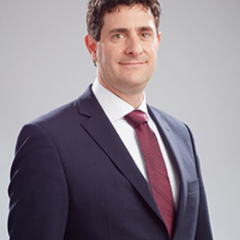
Dominic Gerard, executive vice president of Nunavut and Europe. Dominic will be doing a corporate presentation. welcome, Dominic. Good Morning, Tanya. How are you? I'm good. Good to see you. Good to see you at, at your place. good morning, everyone. Today, I, I have the pleasure to present and to introduce more, what is Aiko. What are we doing, who we are, but more importantly, what differentiate ourselves. But maybe before I begin, please take, my, in my remarks is gonna be looking forward statement. So who is A Nico? So now we're the 2nd largest gold producer in the world. we have 10 mines in operation in 4 countries, so Canada, Finland, Mexico, and Australia, but 85% of the production is coming from, Canada with the, the three region Quebec, Nunavut, and, Ontario. We are today, on the, on the financial state point of view. Last year we generate 18.8 billion EBDA. We had the 4.4 billion free cash flow at the end of last year. On that On that cash flow 2.7, we finished with net net cash balance at $2.7 billion last year, and we've give back to shareholders $1.4 billion through share buyback and to dividend. What differentiates a nico Eagle to other companies? We don't consider ourselves as a global mining company. We are more regional mining company, and that's why I think we are able to succeed today where we have our costs or 2 to $300 per ounces less than our peers. What, what, why this is important, the regional aspect. It's the way that we found that we've built the company since many years that we've been able to have a clear and the best way to have a sustainable business. So there are two criteria before we go into a region. Is there a geological potential that we could build many mines and to be there for many years, and do we have the political and social stability to be there for many years because that's the way we think we're able to create and to build a competitive advantage where we have a long term relationship with the communities. We have a good, let's say our employees. or more, committed stay with Anico. We have a very low turnover. Our turnover, for example, in Quebec is 5 to 6%. Overall our turnover is half of the, the, the other business. When we look at the, the, we have some sites that the 3rd generations that people are are at site and I'm a good example of that. I've been with Technico 26 years starting when Technico was one mine. And today, my daughter is a mining engineer at, at, at one of one of our mines in Nunavut, but I'm not an exception. That's the common in technico to have this, so that give us, good strength to, to build our project and to have a good technical base on the knowledge on operation on construction, and on delivering on, on target, What's the result of that, is it working? When you look at our results, it's working. So in the past 20 years we've been able to increase the production 14 times compared to where we were before. This looks good, but what is difficult to do is to do it per share, and our focus always remains to do it per share. We've been able to the last two decades to increase our production per share by 3 times, which is not an easy achievement to do, and we have a growth plan. I'm going to talk later to keep doing that, growing the company without, let's say in a per share value. When you look also on the IIDA and when you look at the number there per share, the dividend per share, everything is in the positive. Overall, Agnico have been better than the S&P 400 and the IAU index, so we have a compounded return of the last 20 years of 13%. Again, the success is based a lot on the strategy to to to grow the company but on a regional basis, so we try to do acquisition or to increase our productivity in the same region where we are. So that's the The future, what we see now, so we are looking to be in the early 2030s, 20 to 30% more production than where we are today. So right now in the next coming years we are 3.4 3.5 million ounces. For the next three years we are going to be north of 44 million in 2030 plus, and this is based on the same five projects that we were looking and working on when the gold price was at 2000. So the the first ones are to increase the production at the site where we have infrastructure. We have the people at Detour Lake. I'm going to talk more in detail in the coming, but the two first sites are assets and operations. After that we have Hope Bay and we have Upper Beaver. This is 2 new sites that we're building or are we going to build. And the, the 3rd, the 5th 1, Saint Nicolass, this, this one is not counted into my increase because it's more a corporate project. So I'm gonna talk more today about the, the next 41, but we, we're in the strongest position that we've ever been with, a good, balance sheet with a good growth profile in front of us and a a stable production in all our operations. Ditter Lake. So that's a world class asset. We've been able in the last five years to increase the, the resources reserve and resources by 25 million ounces in the last five years into that project. So without thinking differently or doing an expansion, we're going to be mining there up to 2060, 2070. That mine was discovered or was in operation in 2050 or 2080, 2090, just just underground at the time. In 2010 that was reopened with an open pit and this is what we are mining right now at 700, 750,000 ounces per year, but now we are looking to go back underground. And to take higher grade from underground to replace lower grade from open pit to bring that to 1 million ounces. So again this is done with existing infrastructure. The mill we already have underground mining. It's not a secret for us, and we're going to increase in the 2030s to 1 million ounces per year. This is one part of the the the growth that we have in our view. The second one, Canadian Malartic. Since we've moved, we're moving from open pit at 60,000 tons per day. Now we're in 2029 we're gonna be 100% going underground, so the grade is gonna triple from 1 g to 3 g, but the mill capacity is gonna move or the mill production is gonna move from 60,000 tons to 20,000 tons per day. So we're gonna keep the same production 550,000 ounces per year. But we had a great opportunity, 40,000 tons per day available at the mill. So we've talked about that the last 2 worked on that last 2-3 years. There's 3 parts of that to bring that that one also to 1 million ounces. The first one we're looking to have a second shaft because that deposit, it's a world class deposit and there's enough room that we're able to to extract more for the the EGD Odysse deposit. So we're planning to do a second shaft that's gonna add 200, 225,000 ounces per year. We're also looking to bring Marban pit. it, it is a pit that we just, with the acquisition of 03. It is at 15 kilometers away from the mill, so we're going to mine it, truck it to the mill, and we have another project in Quebec called Wazamac. It's an underground mine, 3000 tons per day, 100 kilometers. We're going to truck it to Malartic ill. So that's the second part of the puzzle to, to, to add more answers in the coming years again. On the site in a region where we know with with with with a low risk, if you combine Malartic and Detour together in the last 10 years we've been we've been able to add 50 million ounces on resources just by drilling and by bringing, bringing new ideas. So that's really an interesting way to create value. the third one, Upper Beaver, that's a project in, in Ontario. It is close to, you can see on the map, it is close to our Macassa site, so we're going to have a second meal into that camp. it is 210,000 ounces per year we're looking for, but that also might also unlock other deposit that we have in that camp in the future, having that meal. So, we're doing currently the, the, the, the shaft sinking. That's the same team that did the Macassa shaft shaft number 4 doing that shaft, and the team doing the construction, it's also we do our own construction, so the site or the development is going as planned and we're on target on this one. And the, the last one and not the least, I'm gonna talk Hope Bay, we bought that project from Team Mac. In 2021, at that time it was 10,000, 100,000 answers per year. it was not enough for Nunavut, so we've, we've put it on, on current maintenance and we've drilled it very hard, and, we found a new, new deposit with patch seven, which is the best that we have. So now we go, we're looking, we're targeting to announce the construction of that project, in May, May 19th, That's going to be 400, 450 on the life of mine, 1000 ounces per year for the 1st 10 years, but that, that's just the beginning. why we're announcing it now because it's like what we did at Meliadin. We need to have enough engineering, to be to make sure that the costs and the schedule are solid. So we're gonna be, announcing it in May, and we, we are already over 50% of engineering. The team doing Meliadin from the study engineering and now we're starting to beef up the operation are the same team or part of the team that did Meliadin. So again, even though it's in the Arctic, it is not an easy environment. it is not our first barbecue, Tanya, and we're going to do one also in May. But we, we are confident on that project. Now we have what we see is the first picture, but of the 1st 10 years, but we have an 80 kilometer greenstone belt that we're going to keep drilling and most probably keep expanding that property. So that's the last one I was looking to talk to you. With their significant potential there. So that's the way at Nico we are creating value. Our focus is really to create value per share, not just to, to, to improve, improve production. That has been our mindset, and we could see the result of that, and we're going to keep, keep doing it, so. From optimization from project we have the best pipeline that we never had, with what we have in the middle, but we are also working and looking for what next. What, what project we should bring into play in 2035. So on the exploration side on M&A, this is the thing that, always looking forward to, to keep, building that pipeline so. On that, I will, pass it to you, Daniel, for question. OK, thank you very much, Dominic. I'm going to open it to the audience to see if there are any questions from the audience, gentlemen over there. May I ask about your European ambitions? It seems that Europe is quite small now relative to your Canadian assets, and it's been the focus of companies to try to slim down their non-strategic assets. What does Agnito plan to do within Europe? What does it generate in terms of ounces and what are its ambitions? Well, we're getting that question, I think at all meetings. Same thing. Australia in Australia and Europe, is it non-core asset? We don't see that as a non-core asset because both of the sites have a long life of mine. In fact, in Australia that's the longest life of mine that that site has never had. But we also see exploration potential at two sites at Kittila and also at Fosterville. So, for us we, we keep drilling it. Plus when you think about that today they both sides are doing around 1 million free cash flow per day. So they are not, on cost. They are more, they are providing value to us and Both place in Kittila and especially in Australia it is really difficult to start a new mine and to build a new mine. So having those assets, it's it's an added value and it's we keep the regional thinking OK how could we bolt on that, at the same place or around this that we could use the synergy we have with the team, the synergy we have the infrastructure, so, there is no plan to er to let those go for now. The gentleman over here Do you have any plans in the Dominican Republic? I think we are, maybe involved in a project. I'm not sure, I will say maybe overall we are getting a lot of questions. Are you interested in that one on that one. We are invested in approximately between 60 and 70 projects which some of them are public, some are some some of them are not. And really that's the way we've been building the company. Our goal by doing that is to have access to the data, having access to the people, being more comfortable with the with the region, to get the the knowledge advantage, and you know, often the value of the project is well priced, so you need to see through that. You need to see through the exploration potential to, to, to, to match the value and to to create the value. We're patient, so often it could be 2 years, 5 years, 7 years working with the, the, the junior company to, to help them to develop the project. It's good for us, but it's also good for them because we could provide some technical knowledge and help out to to to develop the project. so I could get all questions about each project. Again we have a dedicated team on evaluating project and also project, project development. full, full time people on that, er, working, looking to different projects. Maybe to, maybe Tanya, maybe to answer. I will be back to the two criteria. Could we build many mines? and we have the geological potential to see many mines. That's one criterion. The second one, is it stable socially? Is it stable politically? So even though we could build many mines in Africa, we won't, in Africa, we won't go there. Maybe just to round off Mexico, you've talked a bit about, you know, Europe and maybe just what, what's happening in Mexico, your strategy there. Yeah, so Mexico, we, we have one mine still in operation, Pinos Altos. There's 2-3 years, in front of us. The team is looking with the current gold price, could we expand it because again we have the thing built and we have the team. we'll see if there's something. But the thinking is, is to use the workforce and the knowledge, to help and to develop, CENC. So we're still into the permitting phase into the study phase at Saint Nicola, but, that's the plan that we have, for more clear, let's say in the future for Mexico. And maybe if I can keep going on just about mine building in general, like one of the concerns when I ask the CEOs of all mining companies, what is your biggest worry, they say people. Right, we worry about the oil today, but just people in general. So maybe you can talk a little bit, you know, in depth, a bit more in depth about these new mines that you're building. All the people that we need to build these mines, maybe you can just share with us a little bit more about how each are are going to be built and, and how you move people around your operations. Yeah, I, Nico, we, we build our mind. So we never give or we don't give EPCM, so engineering, procurement, construction, and management. The head of all of those blocks is a uniquely good person that we beef up from other sites or at some we, we don't have choice with engineering firms and with consultant and with, with contractors, but we have a core team on construction. That we're able to move from one project to another one, using the same process, using the same way to report, how the project is progressing. So, that's the way we, we do that. I'm not concerned because again if I'm looking at, Canadian Malarctic, the, the team doing a first shaft is gonna be the same thing gonna do the second shaft at Hope Bay. The team that did Milliedin and Amaru, now they are building, Hope Bay. Detour, we already have the people, but that's an interesting question. It's, I think it's a challenge for not just the mining industry. We see a bit less, well, not, a bit less. We see less quality into the engineering firms. same thing with contractor. We get in the past we were able to get a contractor with 10 years of experience. Now it's not the case. It's more you get a contractor with no experience, so we need to, to do more training. But because our original thinking we have access more than often to the A team because the contractor likes to work with us and we, we know who they are, so we're not going in an area where we don't know the contractors we know, we know who they are so we we are able to ask, OK, fine for that project I need that guy, that guy and that guy because I know those guys gonna drive, the construction, for example, at the, at the right pace. Yeah, with a lot of projects being built in Canada, you always have to fight for labor. So yeah, in fact, we're just finishing Hope Bay and I was in discussion with the construction VP, two days ago, and he was explaining to me the factor they're using on productivity, and the one we're using now, at Hope Bay, it's different than Milliadin based on the current situation, based on the. We have less expertise, less experience. So for example, I, I'm just giving numbers at Milliadin on paper you need 11 hour to install a pipe. On paper, so at Miledin was, for example, a 1.1 hour that you need to put on cost at Hope Bay it might be 1.5 hours you put into your estimate because we know we have less, capacity, but the price we're gonna give to you, it's gonna be around this 2 billion to build Hope Bay, this is included into our estimate. Same thing with the the OPEC at Obay we're taking the same price we use we're doing right now at the Amilia Dean and underground at Tamarook in the north. So it's a, it's an advantage we have the historical data to, to discuss the projects. Well, I think we're out of time, but Dominic, I will be coming to that barbecue at Hope Bay on May 20th. So, OK, thank you, Dominic. Thank you.
Recorded at Mining Forum Europe 2026, Park Hyatt Zürich, Zürich. Prepared for information only; it is not investment advice or a recommendation. Statements are those of the presenting company as at the date of the presentation. Market figures in US dollars, not as at the date of the forum.