i-80 Gold Corp. is a Nevada-focused mining company building a mid-tier gold producer targeting approximately 600,000 ounces in annual gold output by advancing its fully funded three-phase development plan of wholly owned assets. The Company is one of the largest mineral resource holders in the state with a pipeline of five core gold projects and a central autoclave processing facility, each at various stages of development and strategically located on Nevada’s most prolific gold-producing trends.
Leveraging its central autoclave processing plant following an anticipated refurbishment, i-80 Gold is executing a hub-and-spoke regional mining and processing strategy to maximize efficiency and growth. i-80 Gold is one of two companies in Nevada with an autoclave. The plant refurbishment is expected to be complete by the end of 2027, at which point the Company expects to begin processing material from its first two underground mines.
Transcript3100 words, automatically generated
This is an automatically generated transcript. Denver Gold Group cannot accept responsibility for mistakes, errors, omissions, or any action taken in reliance thereon. Use of this transcript is governed by Denver Gold Group’s Terms of Use.
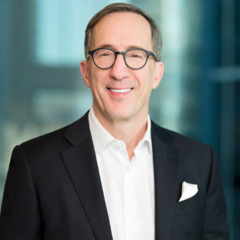
Thanks. Yeah, you're welcome. OK. Up next, we've got another company that has a, trajectory of growth, I-80 Gold Corp. I'd like to welcome to the stage, Richard Young, president and CEO. Now Great to have you. How are you? Very good. Great to be here. So, so this is not Richard's first rodeo as CEO. He's been, with several companies as in the CEO role, and each of them has ended in a significant shareholder value creation. CEO of Tang, founder and eventually CEO of Taranga Gold Corp sold to Endeavor Mining. CEO of Argonaut Gold, eventually acquired by Alamos Gold, and then currently president CEO of I-80. Over to you, Richard. Thank you. Well, thank you very much and I've got forward looking statements as I will be making forward-looking statements through the course of today. So I-80, how did we get our name? We're named after Interstate 80, which transverses across northern Nevada, where some of the largest gold mines have been discovered over the last 30 years. We own 4 past producing mines acquired from either Barrack or Newmont as they were downsizing after M&A activity. We're one of the largest resource holders in Nevada behind Nevada gold mines. Barrack and Anglo and we currently produce about 50,000 ounces of gold per year and we've got a three-phase growth plan to take us to over 600,000 ounces by the early 2030s. I joined about 18 months ago and since then we've added management depth to be able to execute on this plan. We've also refreshed our board to make sure that we've got the skill set at the board level to be able to execute on that plan. So when you look at our resource base, we have nothing in reserves today, but that'll begin changing this quarter. We've got 6.5 million ounces of measured and indicated gold, 7.5 million ounces of inferred, so overall 14 million ounces of gold, roughly 200 million ounces of silver. So on a gold equivalent basis, that's about 60.5 million ounces. So over the course of last year and this year we're working to convert the blue bars to a gold bar. So we're, we're infill drilling to convert inferred and measured and indicated as we prepare feasibility studies for the 5 gold projects in the development plan. I just want to point out that Lone Tree Open Pit is not part of this plan. It will likely be phase 4. So as I mentioned earlier, we've got a 3-phase growth plan. Phase one is ramping up, constructing and ramping up the first two underground mines as well as refurbishing our autoclave. We're one of 2 companies in Nevada with a permanent autoclave, the other being Nevada gold mines. I'll speak a little bit more about that refurbishment later. So with the ramp up of those 2 underground mines, the refurbishment, we're about 200,000 ounces per year. Phase two, we basically double that. Then phase three, when we bring in Merral Point, we get to over 600,000 ounces per year. I'd like to underline that we are now fully financed to be able to execute on all three of these phases without having to go back to the equity markets. So when we filed our PAs a year ago, We had a production profile up to 2047. 1 of the things we've changed is we've added that sort of bluish gray bar. And so the goal is to create a mid-tier that can produce into the 2050s. And so when we look at where we stand today, we're about 4 million ounces contained short of being able to produce that 600,000 ounces per year. Where we think that might come from, and I'll talk about it in a little a few minutes, but part of it bringing in Lone Tree, that's a 3 million ounce resource. We believe we can add another million ounces at Mineral Point, our flagship asset. Conservatively, we think that we can add a couple million ounces through our 3 underground mines and we've got a couple oxide open pits that aren't included in the current plan that we will bring in. So we believe we've got a strong case to create a solid mature gold producer in Nevada through the early 2050s. So we put out the new development plan in the fall of 24. We indicated that we'd file PAs that would support that. We did that at the end of the first quarter of last year, and that shows the growth potential of the asset base. We only ran sensitivities to $3000 gold. Who would have known? And so at $3000 gold, the NAV of these five gold assets was $5 billion. We think at current metal prices it's about $10 and that's not giving any credit for Loan Tree or our autoclave that will be refurbished shortly. So this was the Gant chart that we put out back in the fall of 24. We're on track to meet that, and this shows how each of the assets are proceeding through their phases of permitting and development, and we're on track. The one item that I would mention is currently Mineral Point sits in phase three. With the new administration that came in a year ago, we are looking at opportunities to try and move that project forward. It is our flagship project and I'll speak about that shortly. So one of the problems when I first joined in the fall of 24, we had $200 million of debt that was maturing over the following 12 to 24 months and we had. No possible plan of repaying that, so we needed to put a plan together that would allow us to do that. That was the development plan that we laid out just on a couple slides earlier and then we've been able to recap the balance sheet since then. So we raised $300 million of equity including warrants this time last year and then earlier in the first quarter we completed a royalty financing with Franco as I would describe as the foundational capital that allows us to bring in National Bank and Macquarie on a senior debt basis for a prepay and then we just recently completed a convertible so we are now fully funded. Through the three phases of our development plan and from our perspective we believe that all the warrants will be exercised, the convertible debenture will be exercised, so with all of that we will have about 1.2 billion shares outstanding. At today's share price that's about a $2 billion US market cap, and again as I mentioned earlier, we think that the value of our assets is $10 billion and we think we can do better than that, so we continue to trade at a discount. So since the management changed back in the fall of 24, we put out a new development plan. You may recall that the previous management group was focusing on the base metal. We think the base metals are excellent, but they're just an earlier stage. So we needed to focus on something that could give us tangible cash flows to be able to restructure that debt. We put out the PEAs. We've stabilized Granite Creek Underground. There were some water issues those have now been addressed. And then we've moved forward with the refurbishment of the autoclave, putting out a feasibility study and moving it into construction, and we've permitted and begun construction of our second underground 2 underground mine. Archimedes completed the recap and all the while improving both the depth of the management group as well as the board, which will be so pivotal as we move forward. So in terms of near term catalysts. We've got of our 5 deposits in the development plan, we have feasibility studies for the 1st 2 underground deposits coming out this quarter, Cove and Granite Creek. Meanwhile, we're working on the thesis for the next 3, which we expect to be complete by mid next year. We've got an $85 million drill program underway to allow us to convert inferred into me and indicated as well as some step out drilling. With respect to Loan Tree, by the end of this week, we'll ordered all the long lead equipment. By the end of the quarter, we'll be about 50% committed on the project. We're going to begin the demolition this quarter and commence construction in Q4 and would expect to be commissioning as early as September with first pour in December and then ramping up in the first quarter of 28. Archimedes, we began construction in Q3 of last year. That's proceeding on schedule. Expect to touch or in the 4th quarter of this year and ramp up next year. And last week we participated at the Franco Investor Day and we put out some drill results from the infill and step out program, which we think are going quite well. So maybe just spending a couple of minutes going through some of these key assets in phase one. So Granite Creek is our first underground mine. It is a small mine and people would look at that and why, why are you there? it's a higher cost mine at this point in time, poor ground conditions. But it is within 10 kilometers of Turquoise Ridge. Turquoise Ridge is a Nevada gold mines operation. 30 million ounces has been discovered. Our senior team comes from Turquoise Ridge. They all say this looks exactly like Turquoise Ridge. Our underground contractor still works at Turquoise Ridge, says the same thing for those of you who. Around in the 90s when Plaster bought Gatchel. This is behaving a lot like Gel in the upper zones, narrow, poor ground conditions, grade, not so great, but as Turquoise Ridge got deeper. Ground conditions got better grades improved, and you got more lateral extent. So we've got the fees coming out in Q2. That's going to be positive. We've got another $10 million program there this year. Our VP geology believe this is the asset in our portfolio with the most upside, so we'll continue to work on that. But we have addressed the water issue. It had been a huge issue when I first started. We're moving about developing 3.5 ft per day through the end of last year. In February and March of this year, we're developing 12 ft per day on average, so we've addressed the water. Now we've got to catch up on our development and then drill out into our body, and that's what we're aiming to do. Archimedes, we began construction in Q3 a little bit later than we had indicated in the PA. However, we are well on budget in terms of moving that forward. It's $40 million to develop that asset plus another $10 million of surface infrastructure for a 100,000 ounce per year mine. We believe this mine is going to get bigger. The early drill results have been very good. The system looks like it could get larger, so we've got a $30 million program this year. We'll have the feasibility study out in the first quarter next year. This one's going to be a good one. And then the refurbishment of the Lone Tree process facility. This was built by Hatch. Hatch is doing the EPCM on this project. Santa Fe built it. Newmont acquired it. They ran it until 2006. It's been on care and maintenance. We bought it in 2001. We're one of two companies in Nevada with a permitted autoclave, the other being Nevada Gold Mines. The refurbishment is well underway. some of the major updates will be a new oxygen plant because the original oxygen plant was used. we're going to replace the CIL circuit because it worn away a new refinery. We're going to move from, traditional tails to dry stack tails and then just update, nuts and bolts and get it up to today's standards, including environmentally. So that's well underway, And we expect that to proceed without issue. The last thing I want to talk about is Mineral Point. Mineral Point is the largest asset within our portfolio. 5.5 million ounces of gold, 200 million ounces of silver. In the PA, it averaged 282,000 gold equivalent ounces over a 17-year mine life at $1400 ASIC. We think this deposit's going to get bigger. It's going to be a wonderful asset. It's a heap bleach with very good gold recoveries. The silver recoveries we're working on in the PA, they were 41%. We're going to see what we can do on that. It's a billion dollars to build. But with the current government, there may be an ability to be able to move that forward in our production profile, and we believe that's significant because it's the most valuable asset at current gold prices. The NA might be 6 or $7 billion. So you know why us and why now? So first of all, we're in a tier one jurisdiction. We've got a very large resource base and we've got an organic growth profile. Why now? Because the the the plan is now fully funded. Our execution is on track and we're trading at a significant discount to our peers, as I mentioned earlier on a fully diluted basis. Our market cap is about $2 billion we believe just based on the PAs alone. The NA of this asset base is $10 billion. That doesn't include the roaster. It doesn't include Lone Tree or any of the drilling that we think will expand reserves as we move forward over the next few years. So Don, that's the I-80 story. Thank you very much, Richard. so we do have a couple of minutes for questions. Is anyone in the audience has a question in the front row. Go ahead. Hi Richard, can I ask you about labor in Nevada? you're competing with Newmont, Barrack, Kinross. They have very high turnover at their operations, so I'm just wondering how you're thinking about the, your labor force that you're gonna need for these mines and how are you gonna, you know, kind of compete with these, other companies there. Great question. So first of all, we, we match Nevada gold mines on the cop side., so that takes that issue off the table. We hadn't hired anyone until we complete the equity issue in Q2 of last year, and we've hired about 30 people, and, a lot of those 30 people are mining engineers, metallurgists, resource modelers. We're 4 or 5 resumes deep and we hired superstars. So when we went through the recap, everyone that came back said we've got a great site-based team. it is getting a little bit tighter the last couple of months. We just had a call, this week about that, but. You know Nevada Gold Mines is still Barrack and Newman are still working through some issues, and there's still apparently a little bit of tension and I-80 well before I joined, had a great culture. We've revised our mission, vision, values and performance management system to try and lever off that and ensure as we build the company we continue with those values. So you know we think that we offer something different, but at this point we're fully staffed, though we do have about 25 or 30 positions we'll be filling through the course of this year as we build out Granite Creek, Archimedes, some of the drill programs, some of our sustainability work that we do in the communities, but. The one thing I'd come back and say, and you'll know this, so when you look back in the 90s, the industry in Nevada was much larger than it is today. So there is a lot of talent now. Some of it's gotten a little bit older and they worked on the consulting side, but there, there is a like a tremendous amount of depth, in Nevada. It makes it truly unique. Thank you. We have time for another question if anyone from the audience has one. Richard, so if I may, Mineral Point being it's a flagship asset, and you mentioned it's silver endowment and of course, you know, had many positive attributes, but silver in particular is hard to find in anywhere, let alone North America, but yet there are some producers who are really looking for it in North America. Can you just give us a little bit of color on, some of the parameters at Mineral Point. With respect to, the annual production, I think it's like 2.5 million ounces a year, but the annual production, the opportunity to increase recoveries and maybe even the exploration upside on silver, yeah, no, that's so, So we've got 200 million ounces of measured indicated inferred silver, and we recovered 72 million in the PA, about a 41% recovery rate. We're working to improve that. There is a bit of a clash between silver and gold recovery rates that we've got to work through in a heap bleach environment, but we are working to improve it realistically, maybe another 5 points. and in terms of, you know. We're not really exploring for it. what we did identify was Barra ran the pit at Ruby at, you know, Mineral Point at like $800 per ounce. So as we look at those drill results and where they ended, that's why we think that we can add to the ore body we will get gold and silver. But we're not looking for one over the other, we're just looking for. the most valuable deposit that we can assemble. OK, thank you very much, ladies and gentlemen. This is Richard Young from IED Gold Corp. Thank you very much. Thank you. OK. Up next, I'd like to, call Daniel Hanau, president and CEO of Meneros SA up to the podium. Daniel's currently, as I mentioned, the president CEO, was appointed CEO in 2025. He's also a partner at Sun Valley Investments since 2020 and, has held a number of other positions in the mining sector prior to that. Daniel, welcome. Thank you, Don. Pleasure to be here. it's great to have this opportunity to tell you more about Mineros. S. We are actually a significant, gold producer. We produce 200.
Recorded at Mining Forum Europe 2026, Park Hyatt Zürich, Zürich. Prepared for information only; it is not investment advice or a recommendation. Statements are those of the presenting company as at the date of the presentation. Market figures in US dollars, not as at the date of the forum.