Amex Gold Mining has made significant high-grade gold discoveries, along with copper-rich volcanogenic massive sulphide (VMS) zones, at its 100%-owned Perron Gold Project, located approximately 110 kilometres north of Rouyn-Noranda, Quebec. The Perron Project in Quebec consists of 183 contiguous claims for a surface area of 65.75 km². The project hosts both bulk-tonnage and high-grade gold mineralization styles. Eldorado Gold is a strategic 27% investor.
When combined with the adjacent and contiguous Perron West Project and Abbotsford and Hepburn Projects (including additional claims acquired through staking) in Ontario, the consolidated land package spans a district-scale 570.94 km². This extensive property lies within highly prospective geology favourable for both high-grade gold and VMS mineralization.
Transcript3700 words, automatically generated
This is an automatically generated transcript. Denver Gold Group cannot accept responsibility for mistakes, errors, omissions, or any action taken in reliance thereon. Use of this transcript is governed by Denver Gold Group’s Terms of Use.
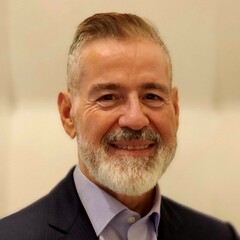
Max Exploration, Victor Cantor, CEO Victor will be doing a corporate presentation. Welcome, Victor. We're good. Ah, there it is. Hi everyone, thank you for taking the time to listening to our, to our presentation. so Amex Exploration, what are we? We're a, we're a company that's moving forward to development we wanna become a, a producer, we just delivered a feasibility study yesterday which will, we'll go through the numbers and at the same time, at the same time we're, moving forward with, with exploration with a really aggressive, aggressive exploration program. where the project is located, we're located in the middle of the, we're located in the middle of the Abitibi Greenstone Belt. this is where our, our project is, and I'll show you where other, other producing mills are, and the reason for it is that our first, phase one contemplates that we're gonna be doing. Toll milling and that's gonna be for 5 years up here you have Casa Berardi that's owned by Ozone here you have Holt Holloway there's Westwood by I am Gold and our our our 27% shareholder is Eldorado Gold that's the that's their Lamack their Lamack mine. And I'm gonna go first with the exploration. So when you look at our, when you look at our land package, we're talking about 618 square kilometers. We originally, originally the project was, was just this year, and that's where we have the 2.3 million ounces at around 5.4 g per ton. and that was 45.6 square kilometers. What we've done since we've purchased, we've purchased this, we went ahead to stake this part. We ended up purchasing this, and we ended up purchasing this. Now we have, a total of 600 square, 618 square kilometers in the middle of the Abbotton. Greenstone Belt, I don't know too many other companies that have that size of, exploration, exploration potential and, and upside. We have 2.3 million ounces just inside this 45.6 square kilometers and also it is not closed by, by any, by any sense of the imagination. And one of the reasons we went on that side is that, is that again the the gold project is right here. And our geologists are seeing a mirror image on, on this side here, and the drills are on site. We're starting to drill. We will update as soon as the drills, once we get the second drill up there, they're, so we're gonna be drilling in that area. We're gonna be drilling here. They see a mirror image. When you look at some of these numbers were, you know, they were getting 25.57 g per ton, that was back in 1987, they were looking for base metals there and basically they've just left it, left it alone. and you know, when you look at our AISC at $910 US per ounce, they're asking how do you get that, you know, at that cost definitely it's a grade also where we're located where our project is located in, Normetal. If you look at here Nor Metal, this is an old tailings pond, completely rehabilitated. Houses, houses have been, houses have been built up, up against it, so social acceptability is, is very. It's very easy there and also what you have is you have a transformer electrical station. basically our project is 6.5 kilometers away from here. We're gonna be plugging in you're basically pulling line. It's not like you have, you know, 750 kV and you gotta bring it down. You need a transformer. The transformer is already there. We're just pulling in the line. Cost of that will probably be in the, in the 8 million $8 million dollar range. And also when we look at, look at the deposit, it's quite, quite interesting because you look at the deposit here so this is where we're gonna have the lay down, the lay down development here and this is basically what we call boring dry. Flat land we're not on the side of a mountain we're not encroaching any lakes, rivers, or streams. there are some stagnant, swamps that are beside here. These swamps, they fill up in the, they fill up in the, in the spring. They're gone by the end, by the end of the summer. So it's really, it's really a great, place, to do mining if you wanna put this project like where would I wanna mine, that's exactly where I would wanna mine close enough to the city. That you can take advantage of all its infrastructure but far enough from the city that that you're not you're not disturbing them and one other thing is the workforce. where are you gonna get the workforce? So Lassar is 23 minutes south of us. Most of the workers from Lasar, most of the workers from Casa Berardi are actually from, from Lassar. And Casa Bride is about 88 kilometers north of us. This project is, this city is, basically about 35 kilometers from our project. So we're expecting to get most of the, most of the workers, most of the workers from there. So just to remind you, our, our resource, it's 1.6 million. Ounces at 6.14 g per ton. There's another 698,000 at 4.31, but within that, what I, what we call the, you know, the star, basically the star of this project is the champagne zone. There's 831,000 ounces at 16.2 g per ton, and it's a beautiful body that's almost, almost, vertical. So what we've done, what we've done so far. We've, we've gotten our full permit for 40,000 tons. it's going to go in at a depth of about 230 m, and yesterday we, we issued our, our feasibility study just for phase one. So what we're doing is we're phasing it even though we have a phase one and phase two. The first, the first phase is actually, is actually the bulk, the bulk sample which we'll discuss further. The other, the other question is, is, that you really need to see in all projects is the metallurgy. The metallurgy is fantastic here. you're looking at a 97.5% overall recovery in our lab tests. We were recovering 99%. In our last PA we actually put 95%, and when the engineers were, were doing the, the study this time around, they were comfortable putting 97.5%. That tells me that they were, they were most likely getting higher, higher numbers than 97, 97.5. so now if I'm gonna start working on the, on the slowly into the feasibility study, so we have to take those resources, turn it into proven and probable. This is, this is basically the, the champagne zone. So we're gonna be mining the 774,000, ounces at 12 g per ton. There's, there's very few projects on, on this planet that have that, that kind of, that kind of grade. And if you look at the project, so this is, this is the champagne zone, it comes, it comes straight down. almost at a 90, 90 degree angle, it's, it's greater than 85 degrees. Stopes are about 4 4.5 m. It's simple geology. It's basically, it's basically gold in quartz. It's free gold. It comes out, it comes out easy in the metallurgy, We're going to be doing gravity. You're getting about 75% in gravity, and then you skip flotation, and then you're going from flotation. You don't need the flotation and you're going straight, straight to to cyanidation. This is gonna be what it's gonna, this is gonna be what it's gonna look like so that dry land where there's no lakes, rivers, or streams, this is what, this is what it's gonna, it's gonna end up looking like, so what we've done, our PA contemplated 17, 17.5 years mine life. What we've done for the feasibility, we're doing it in stages, so we're doing phase one. Phase one is, is, contemplates for 5 years. That's going to be an average of 147,000 ounces a year for for five years with an all-in sustaining cost of 910 $910 an ounce. Again, the, the average grade that's coming through, and this is fully diluted, you're looking at 12 g 12 g per ton. This is how we're gonna be doing. This is how we're gonna be doing the plan here. We've, we've announced the, the bulk sample. We got the permit in early 2026. We're, we got the permit right here. Construction is gonna start in the coming weeks. you're looking at, by 2027, sometime in the second half of 2027, we're gonna be mining that the 40,000 tons will be generating about 23,000 ounces. Now again, depending. What price you use, you could, you could, you know, 23,000 ounces you use 4000 you're gonna be generating $86 million US and that's gonna, that's gonna bring in 100 and, you're looking at $118 million Canadian again if you use 1.1.38, we've completed the, the feasibility study, we completed the feasibility study right there. Our CE is $193.9 million. That's the money you're gonna need around, around here. And the way you're gonna get that money because you're doing it because you're doing it in stages, the only financing you're gonna need is your is your feasible is your is your bulk sample. The bulk sample is gonna be about $50 million. 65% of that $50 million is already. Is already infrastructure that goes into your into the feasibility study of your of your capex plus after that you're gonna have $118 million from your revenues from your bulk sample and you're also gonna have pre-production you're gonna have pre-production revenues from from your mill so the way the pre-production revenue works is that until you attain commercial commercial production. Everything before that is, is, is considered capex. So all the gold you're producing at that point is, is goes against, against your capex. So when you add it all up, it's, it's our capex is pretty much, is pretty much taken care of. So yesterday we reported, yesterday we reported the, the numbers from the feasibility, base case we're using $3500 3500 dollars an ounce. we use spot at $4750 Friday. That's where, that's where it had closed that in that area. And these numbers are fantastic when you look at the, the, post-PAC, payback period you're looking at the 0.5. That's basically half a, half a year, you look at the, the NPV, you're looking at $1.1 billion. This is all after tax numbers your IRR $114.6 million. On the left side you have the sensitivity study that even, even if gold would fall to $2500 which I don't think anybody in here thinks gold is gonna go down to $2500 so your, your payback period is 0.6 with a 78.8%, post-tax, these are all post-tax numbers, I IRR. And you look at your MPV over your capex, it's still showing the 5.8. A project goes forward with a 2 with a 2x here, here you're looking at, at 5.8x. Now when we look at, accept social acceptability, we've done, we did, we're in two different communities. One is a town called Val Canton and another one is a town called Normal. We've done, we've done presentations, so the Valcanton has about 400. Residents, about 62-63 people showed up and there were nobody opposed the project. They actually want the project to go forward. They're asking when can they get their jobs, when they can move forward. Same thing with Normal. It's a community of over 800 and more than 100 people showed up. Same thing. There was media. There was TV there. We were expecting, you know, there's, we're always expecting that one person that would oppose the project. There was no, no opposition. First Nations relations, we're only dealing with one nation. It's called the, it's, it's called the Pico gang or the Abitibi Winni. they're, they're business oriented. They already, they've, they've had a, an impact benefit agreement with Casa Berardi for the last 20 years. We're working on getting agreements done with them and so in the coming days, that's one of the milestones that you'll be seeing, shortly will be, will be, will be, that's one of the other milestones that, that we're, that we're gonna be announcing, Capital structure we're at, we have 142 million shares out. There's 4 analysts, there's 4 analysts that, cover us. Eldorado Gold owns, 27%. Insiders we own 6.2%. We are, we are committed to the ESG. We have the eco logo, stamping in Quebec. The eco logo stamping is, The eco logo certification actually it's not just yourself you need to get all your all your suppliers that also have to be also have to be eco logo eco logo certified. When you look at when you look at the deposit, it actually. When you, when, when you look at this, where, where it's the colored, that's where you're looking at the grade, so everything that you're seeing there in purple is, is 10 g, is 10 g or more, and that's what really makes this deposit special when, when people ask us how do you, how can you get to that, you know, how do you come up with $910 USD that's, that's really, a lot lower when we did our PA actually our PA was, we were at $1,165 and now, now it ends up being, 90 $91,010. the amount of free cash flow, the amount of free cash flow that this produces, it's, it's really spectacular, you know, pre, pre-tax, you're looking at 2.4, 2, almost $2.5 billion at, at spot you're looking at 3.7 $3.7 billion. So you know when it comes to checkpoints here we're, you know, we're doing everything by phase, you're looking at, you know, the bulk sample is done, feasibility for the feasibility for the, for the phase one is done. Now we're construction is gonna start for the bulk sample. So the bulk sample, what's really important, it's not just the bulk sample. It's actually you can call it mining. It's test mining. It's the same, it's the same ramp that you're gonna be using. It's the exact same ramp that you're gonna be using for your, it's the exact same ramp you're gonna be using for your, your, your phase one. This, this is gonna be the underground development for your bulk samples. So you're, you're, you're, you're creating this, this tunnel for 1.3 kilometers, the ramp, The decline and then and then you've got you've got the ramp, community, community engagement community acceptability that's all there first nations acceptability is there we're we're really looking forward to breaking your ground and starting construction with the, the RFQs have been out the the request for quotes for contract mining, so bulk sample. Bulk sample is gonna be contract mining. Phase one is gonna be contract mining. Phase two is gonna be our own, our own, staff and our own employees, and it's gonna be company, companywide and. The deposit is not, is not closed by any, by any, by any stretch of the imagination. this is that this is that champagne zone we've, we've put in holes, so we've defined it up to 1.4 kilometers. We've put in a hole of 1.6 kilometers. It's still wide open. The Abitibi is known for, for, for deep holes, for mineralizations going, going, going way deep, and that's, that's about it in 15 minutes. OK, thank you very much, Victor, for that. by the way, these holes look like champagne bubbles to me, so it's a good way to, to, to, to, to name this zone. can I open this up to the audience for any questions? No, if not, I do have some questions as I listen to your presentation, Victor. As I listen to it, looks like we, you know, you've got your permit to do the decline and get your bulk sample, and then from there we would probably need another permit for the operation itself, so we'll have to apply for that. We'll need to get the impact benefit signed with our First Nations. Is that all that is required then you have everything in in place? Absolutely. The mining, the way you're mining your bulk sample is gonna be the exact same thing that you're doing for phase one, except you're gonna be ramping down, you're gonna be ramping down it's the exact same thing. So I'm not expecting any, so we've, we've put it on our chart here that it's by, by middle of 2028. again, I have a hard time believing that it's gonna take, it's gonna take that long. Once, once you've, extracted your bulk sample, and you know you're doing a great job with the community in the First Nations, I can't see why they would put us through the bad process. The bad process, it's fine to go through it, so the AP and the. Middle is the audience public in French means public public hearings, but the BAP has the authority to say we're gonna call a public hearings or not. I can't see how you would call public hearings for this, for this project. That's really everybody wants the project to go forward, and I guess the last thing is we need to put the toll milling in place as well. Yes, so there is a, there is a toll milling agreement. There is, so to get your bulk sample, there is a toll milling agreement in place. It's an, it's an LOI. a letter of intent and we're gonna have to move from there to to a definitive, to a definitive agreement. we're currently negotiating with 4 with 4 different mills, so we're, we're just, we're just keeping everybody, everybody on their toes and we're trying to get the best, the best deal possible. So what we've done in the feasibility study. Is, is we've done from the shortest distance to the furthest distance we did a blend also we did for a blend for the cost of transport and then what we've done is that we've we've chosen without naming the mills we've we've put in the distance to each mill and shown the difference, the difference in the cost of, of, of each one. So when, when the full feasibility study is is. Filed you'll be able to get all those, all those numbers on a, on an individual basis and actually if you start doing the distance you'll probably know which mills we're we're talking about. Yeah, I was just gonna ask what how, how, how far are these mills. Sure, so the, the, the Casaberardi, Casaberardi is, is the, is the simplest one. It's, it's straight, it's straight north of us. So we're here. This is Casa Berardi here. Holt Holloway is here. Those are the two closest and the logistically the easiest ones to go through. LAc, which belongs to our, our 27% shareholder, and, and Westwood, you'd have to work with the Ministry of Transport is you're, you know, you're gonna have like, 30 to 40 trucks a day, you're gonna have 30 to 40 trucks a day going through there versus if you're going up to Casa Berardi, you're going to, you're going through, transport, you're going through forestry roads. Yeah, so the closest are the 60 kilometers and it's 88 kilometers going up to going up to Casa Berardi or it'll be 224 kilometers going, going to La Mac. OK, thank you for that. I have one more question. If I could squeeze it in, you know, just I saw a lot of VG in the core, and so I'm just wondering as you came up with your 12 g per ton, which is very high grade, what cutting factor did you use in terms of trying to get the right grade because as you know, if we don't get the grade right, we've got a problem. Absolutely. So we did use 2 points, we did use a cutoff, for, for this, for this project now at 2.7 g per ton. which is, which is quite high, and it's really for the mining, it's really for the mining sequence that we, it's really for the mining sequence that we did that, you know, I've been asked, I've been asked, is it nuggetty, is it, you know, I can give you a simple answer. Yeah, there's nuggets right through, because if you look at it from 75 m all the way down to 1.4 kilometers, everything that's pink there, it's 10 g, it's 10 g or higher. Like when you look at, when you look at the pictures of the, When you look at the pictures of the metallurgy, holes, they're, they're quite, they're quite impressive. What, what we've also done, I mean, look at the, look at the visible gold that you see there, it's, it's, you know, those are really great. What we've also done, which is a little bit different than what you usually do, is, we've done some of the great control holes from surface. I mean, we use, we use the deviation control, so it did go to the piercing points that you wanted it to, to go to, and we were getting either the. Same or even higher. I mean one of our one of our, rock mechanicals actually which, which you end up, you gotta put it right through, right through the mineralization because you're gonna be mining that they gotta test the, the integrity of the, of the, of the rock. Some of those numbers were coming in much, much higher so I'm, I'm expecting numbers to come in even, even much higher than that. I mean, you know, when you're using core like this and when you're taking up everything, I think it'll be, I think it will, we'll have some pleasant surprises. Well, at, that grade and 75% coming from gravity, which is free, that's amazing. So congratulations and thank you, Victor. Thank you. OK.
Recorded at Mining Forum Europe 2026, Park Hyatt Zürich, Zürich. Prepared for information only; it is not investment advice or a recommendation. Statements are those of the presenting company as at the date of the presentation. Market figures in US dollars, not as at the date of the forum.